We often tell ourselves that Culture and Technology are opposites. That one is the slow, tangible custodian of the past, while the other is the fast, automated future.
But the truth is, they are exactly the same. Both are built on the layers of what came before. Both are in a state of constant change.
And fundamentally, both are obsessed with the same goal: to disrupt the status quo and increase their impact in the world.
As I prepare for the REMIX Summit in London this week, where these two worlds explicitly collide, I’ve been reflecting on the last 15 years of building digital strategies.
Specifically, I’ve been looking at the organisations that understand this relationship, including clients such as The British Council, Hampstead Theatre, The School of Life, The Modern House and CultureLabel.
The organisations that are thriving right now aren't just "lucky." They share a specific set of behaviours. They think less like curators and more like entrepreneurs. They understand that technology is a commodity, and the mindset you apply to it is the competitive advantage.
Before I head into REMIX Summit to explore what the future holds, I wanted to capture what I’ve seen working up to this point.
Here are 7 distinct patterns I see in successful cultural organisations that are using behavioural science, technology and an entrepreneurial mindset to win.
1. They obsess over society interests, not internal schedules
The Principle: Social Proof.
Successful leaders know that humans are herd animals. We look to others to define what is valuable. Winning organisations have moved from "broadcast" (announcing exhibition dates) to "product-market fit." They don't just push their schedule; they tap into the wider cultural conversations the audience is already having; climate, identity, mental health, and position their programming as the valuable answer to those questions.
- The Example: The Black Country Living Museum. Instead of posting dry archival footage, they tapped into the "HistoryTok" trend on TikTok, using costumed actors to create short, relevant skits that spoke the language of a younger generation.
- The Proof Point: They became one of the most followed museums in the world on TikTok (surpassing the MoMA), amassing over 1.3 million followers and reaching a demographic that had previously ignored them. (Source: The Guardian) \

2. They simplify the "Messy Middle" of the visitor journey
The Principle: Cognitive Ease.
Behavioural science tells us that "cognitive strain" kills action. Organisations that get it right respect that a ticket purchase, or visit to a museum, is rarely a straight line. It’s a "messy middle" of hesitation, research, and distraction. They use digital tools to remove friction from the functional journey, introduce friction when thinking is required, and nurture visitors from "vague interest" to "committed member" with the right mental load.
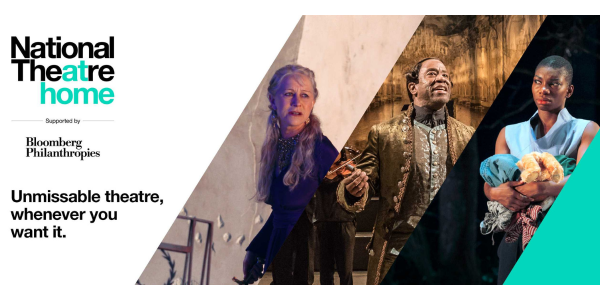
- The Example: National Theatre at Home. The NT realised their "customer journey" shouldn't end just because the physical theatre is full or the customer is overseas. They built a streaming platform to capture intent globally.
- The Proof Point: During its initial launch, the initiative garnered 15 million views across 173 countries, proving that removing physical friction unlocks massive latent demand. (Source: The Guardian)
(Source: Official London Theatre)
3. They lean into technology, not hype (Substance over Noise)
The Principle: Value Perception.
The best leaders don't chase headlines; they chase utility. When the Musée d'Orsay launched their recent Van Gogh exhibition, they didn't use AI as a gimmick. They used it to solve a specific problem: How do you make a dead artist feel alive? They created "Hello Vincent," an AI terminal trained on his letters, allowing visitors to have intimate conversations with the artist.
- The Example: Musée d'Orsay. They used technology to deepen the emotional connection to the art, rather than distract from it.
- The Proof Point: The exhibition broke the museum’s all-time attendance record, attracting 793,556 visitors, proving that "sacred" art and "new" AI can coexist commercially if the value is clear. (Source: Artnet)

4. They are agile, move fast, and keep it simple
The Principle: The MLP (Minimum Lovable Product).
The most innovative teams I see have shaken free from "perfectionism paralysis." In tech, speed is advantage. They embrace the idea that progress is better than perfection. They launch small, test ideas, and iterate based on real feedback rather than waiting years for a "perfect" digital launch.
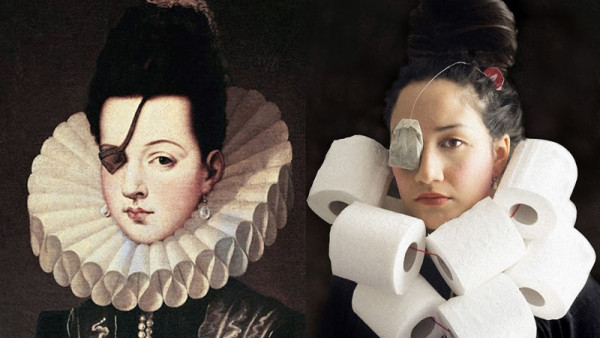
- The Example: The Getty Museum Challenge. During lockdown, while other museums scrambled to build expensive virtual tours, the Getty simply asked Twitter users to recreate famous art with household items. No code, no budget, just a simple idea executed fast.
- The Proof Point: The hashtag generated over 100,000 submissions globally, achieving higher engagement than multi-million dollar digital platforms. (Source: Shorty Awards)
5. They focus on intelligence, not just data
The Principle: Feedback Loops.
There is a big difference between "data" (Did we sell the tickets?) and "intelligence" (What did we learn?). Smart organisations use data to inform the future, not just report on the past. Their digital ecosystem isn't just a sales channel, it’s a listening tool. They combine Left Brain (data) with Right Brain (strategy) to pivot and grow.
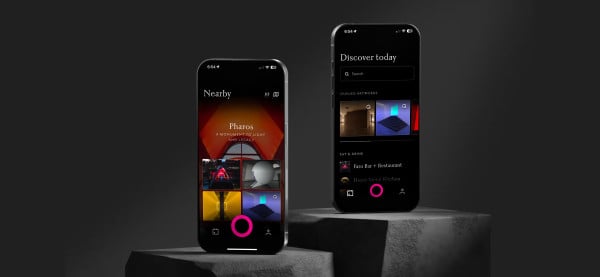
- The Example: MONA (Museum of Old and New Art). They abolished traditional wall labels, replacing them with "The O", a device that allows visitors to vote "Love" or "Hate" on every artwork. This generates a real-time heat map of audience sentiment, informing exactly how they curate future shows.
- The Proof Point: The device has a 98% pickup rate, meaning the museum captures granular behavioural data on almost every single visitor, turning a passive walk-through into a massive intelligence-gathering exercise. (Source: Art Processors)
6. They turn visitors into co-creators
The Principle: The IKEA Effect.
Behavioural science proves that we place a disproportionately high value on things we helped create ourselves. As a result, passive observation is fading. Audiences today expect to participate. The winning strategy is to hand the tools over to the audience, letting them remix collections, co-create stories, and share their version of the experience.
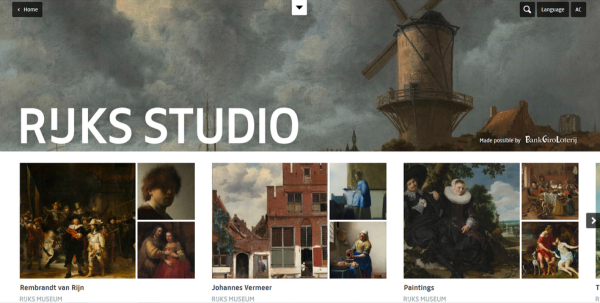
- The Example: Rijksmuseum (Rijksstudio). They famously digitised their collection and made it high-res and free, explicitly telling the public: "Make art with our art."
- The Proof Point: Since launching, over 800,000 personal 'Rijksstudios' have been created by the public, effectively turning the audience into the museum's biggest marketing team. (Source: Rijksmuseum)
7. They remember: the product is the art
The Principle: Emotional Resonance.
This is the most critical pattern of all. In tech, a great platform cannot save a bad product. In culture, technology is just the delivery mechanism. The content, the human story, the beauty, the shock, is the product. Winning organisations never let the platform outshine the art.
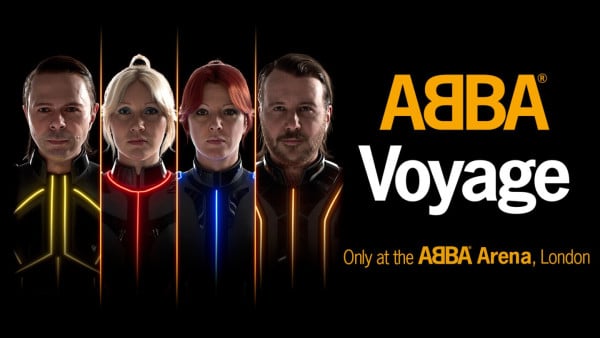
- The Example: ABBA Voyage. It is a technological masterpiece of lighting and avatars. But the reason it is sold out is the songs. The tech is invisible; the emotional connection to the art is front and centre.
- The Proof Point: The show contributed £322.6 million to the London economy in its first year alone, proving that when tech serves the art perfectly, the commercial results follow. (Source: Sound Diplomacy)
What’s Next?
Whilst the cultural sector has the stories, and technology has the modern capabilities. It is the entrepreneurial mindset that connects the two.
These are the patterns I’ve seen working so far…. But the landscape changes fast.
I’ll be spending Thursday and Friday at the REMIX Summit listening to and sharing our perspective on what comes next.
Keep an eye out for my follow-up article next week, where I’ll be digesting the key takeaways from the summit and looking at how these trends might evolve in 2027 and beyond.
If you’re at REMIX this week, let’s grab a coffee. I’d love to hear what patterns you are seeing.